Pigmentation: More Than Just Sun Damage
Pigmentation refers to areas of skin that appear darker due to increased or uneven production of melanin — the natural pigment responsible for skin colour. While sun exposure plays a major role, pigmentation is a complex process influenced by both internal and external factors.
Melanin is produced by specialised cells called melanocytes. When these cells become overstimulated or unevenly distributed, excess pigment can accumulate in certain areas, leading to visible dark patches or spots. Research shows that pigmentation can develop or worsen due to hormonal changes, inflammation, genetics, medications, and skin injury — not just UV exposure.
Common Types of Pigmentation and Their Causes
Freckles (Ephelides)
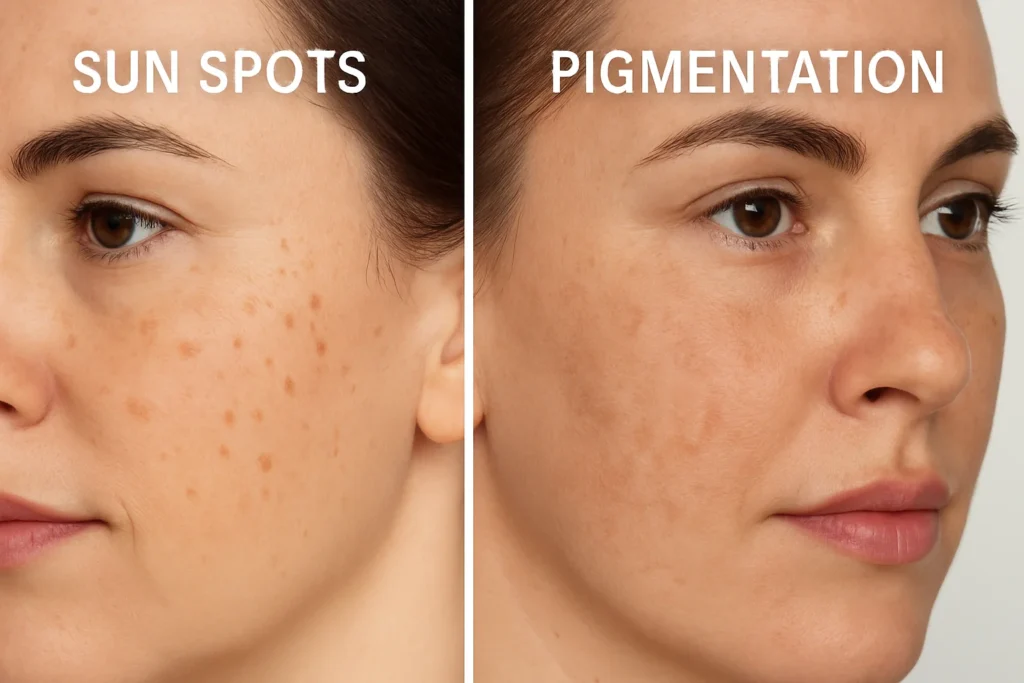
Freckles are small, light-brown spots caused by a genetic predisposition combined with sun exposure. They form due to melanin clustering in the upper layers of the skin. Freckles often darken with UV exposure and may fade when sun exposure is reduced or well protected, but they tend to return if UV exposure continues.
Sunspots (Solar Lentigines)
Sunspots, also known as solar lentigines, develop after long-term sun exposure. They appear as flat, light- to dark-brown patches on sun-exposed areas such as the face, hands, shoulders, and décolletage. UV damage triggers excess melanin production as a protective response, leading to these persistent pigment spots over time.
Melasma
Melasma develops through a combination of hormonal stimulation and sun exposure. Hormones such as oestrogen and progesterone increase melanocyte sensitivity, making the skin more reactive to UV and visible light. This explains why melasma commonly appears during pregnancy, oral contraceptive use, or hormonal therapy. Even low-level sun exposure can worsen melasma without strict protection.
Post-Inflammatory Hyperpigmentation (PIH)
PIH occurs when inflammation or injury triggers excess melanin production during the skin’s healing process. Acne, eczema, laser treatments, burns, or trauma can overstimulate melanocytes, leaving dark marks once the skin heals. PIH appears more frequently and often lasts longer in deeper skin tones due to higher baseline melanin activity.
Why Some Pigmentation Is Harder to Treat Than Others
Not all pigmentation behaves the same. Some pigment sits close to the skin’s surface, while others extend deeper into the dermis. This variation is why a personalised approach—considering the depth, cause, and behaviour of each pigment—is essential for safe, effective, and long-lasting results. With the right combination of expertise, targeted treatments, and home care, we can help your skin look clearer, smoother, and healthier over time.
Superficial pigmentation, such as newly formed sunspots, usually responds faster and is easier to treat. In our clinical practice, chemical peels and laser skin rejuvenation often deliver excellent results for sun-related pigmentation when we select the right treatment for the skin and pigmentation depth.
Solar lentigines caused by long-term sun exposure can be more challenging to treat, particularly in Asian skin types, due to a higher risk of post-inflammatory pigmentation. In these cases, selecting the right treatment is essential to minimise this risk. Even with advanced technology such as pico lasers, improvement can be gradual. This is why we take a progressive, staged approach—often combining skin needling with chemical peels—to safely improve pigmentation while maintaining healthy, balanced skin.
Post-inflammatory hyperpigmentation develops in response to skin injury or inflammation and can involve multiple skin layers. Because of this, PIH often needs more time and a structured approach. Treatments such as RF microneedling or medical skin needling combined with chemical peels have shown strong clinical improvement by stimulating collagen, supporting skin repair, and gradually dispersing excess pigment.
Melasma behaves differently from other types of pigmentation. Hormones play a significant role, and triggers such as sun exposure and heat can easily worsen it. Best practice focuses on strict sun and heat protection combined with gentle, progressive treatments rather than aggressive approaches. We often use a combination of chemical peels and controlled skin needling, which delivers safer, more sustainable results over time.
Across all pigmentation types, home care plays a critical role. Professional pigmentation treatments create change, but consistent home care helps maintain results, prevent rebound pigmentation, and support long-term skin health.
This is why professional assessment matters. Treating pigmentation without understanding its depth, cause, and triggers can lead to uneven results, rebound pigmentation, or unnecessary irritation. A personalised approach always delivers safer, more predictable, and longer-lasting improvement.

Pigmentation Treatments at Medix Skincare & Laser Clinic
Laser Pigmentation Removal
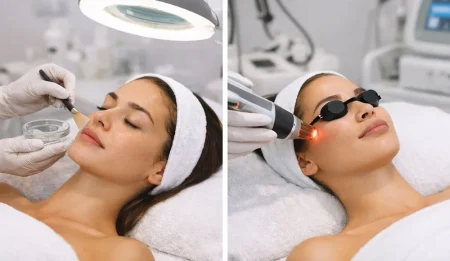
Laser pigmentation removal breaks down excess melanin in the skin, allowing the body to clear pigment naturally over time. This approach helps fade dark patches, sunspots, and uneven tone while also stimulating collagen renewal for brighter, more even-looking skin.
Chemical Peels
Chemical peels remove sun-damaged surface layers and accelerate cell turnover. This process lifts superficial pigmentation, smooths skin texture, and improves clarity while encouraging fresh, healthier skin to emerge.
HydraFacial
HydraFacial gently resurfaces the skin while deeply cleansing, exfoliating, and hydrating. It clears buildup that can worsen pigmentation, restores radiance, and supports healthier skin function — ideal for dull, sun-stressed skin.
Medical Skin Needling
Medical skin needling stimulates the skin’s natural repair process through controlled micro-injuries. This boosts collagen production, improves texture, and helps fade pigmentation by promoting more even melanin distribution over time.
Radiofrequency Skin Needling
RF skin needling combines microneedling with radiofrequency energy to deliver controlled heat into deeper skin layers. This strengthens collagen and elastin, improves firmness, and effectively targets post-acne marks and deeper pigmentation concerns.
Ready to reveal your skin’s natural glow? Book a consultation at Medix Skincare & Laser Clinic in Melbourne, and we’ll carefully assess your skin, guide you through the best treatment options, and create a personalised plan to help you achieve a clear, radiant, and even-toned complexion.
Contact Medix Skincare Laser Clinic
📞 Phone: 03 9686 0003
📍 Address: 1/367A Centre Road, Bentleigh, Victoria 3204
View on Google Maps
Frequently Asked Questions about Pigmentation and Sun Spots
Using broad-spectrum sunscreen daily, avoiding excessive sun and heat, following a consistent skincare routine with vitamin C and retinol, and supporting your skin with professional treatments when needed are the best practices to prevent pigmentation.
The most effective treatments depend on the type and depth of pigmentation. Common options include laser removal, chemical peels, medical or RF skin needling, and HydraFacial. Combining professional treatments with a targeted home routine gives the best results.
Pigmentation improvement varies depending on the type, depth, and your skin’s response. Superficial pigmentation, like sunspots, may lighten within a few weeks, while deeper pigmentation, such as PIH or melasma, often requires multiple sessions over several months. Consistent home care and sun protection help achieve the best results.
Yes, they can, especially if your skin continues to face the same triggers, such as prolonged sun exposure or hormonal changes.
Maintaining good daily habits and protecting your skin from UV rays is the best way to prevent them from returning.
Most pigmentation, including sunspots, usually doesn’t fade completely on its own. Sun exposure, hormones, and skin injury can make it persistent or worsen it. Professional treatments combined with good home care are the best way to even out skin tone and prevent new spots.
Disclaimer: The information provided on this website is for general educational purposes and does not replace a professional medical assessment. Results of pigmentation treatments may vary depending on skin type, condition, and individual response. Always consult a qualified clinician before starting any treatment.