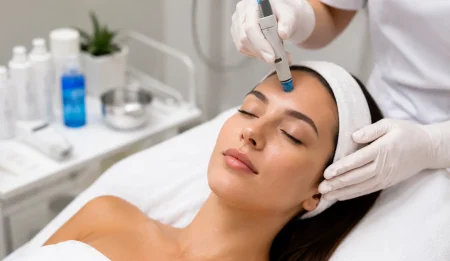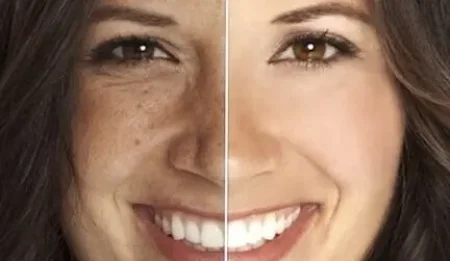
Pigmentation is a common concern affecting people of all skin types. Whether caused by sun damage, melasma, post-inflammatory hyperpigmentation, or age spots, uneven skin tone can make your skin appear tired and aged. Many people wonder, “Should I choose a chemical peel or laser skin rejuvenation for my pigmentation?” The answer depends on your skin type, pigment depth, and the underlying cause. In this article, we’ll explore chemical peels vs laser rejuvenation for pigmentation in Melbourne, how they work, their benefits, limitations, and how to choose the best approach for your skin.
Understanding pigmentation: why It happens
Typically, pigmentation occurs when melanocytes — the cells responsible for melanin production — become overactive or unevenly distribute pigment, leading to dark patches, sunspots, or an overall uneven skin tone.
Interestingly, the number of melanocytes is similar across all skin types. What differs is the type, amount, and distribution of melanin, which explains why some skin types are more prone to pigmentation.
- Darker skin tones (Fitzpatrick IV–VI): produce more melanin per cell, offering natural UV protection but a higher risk of post-inflammatory hyperpigmentation (PIH) after acne or skin injury.
- Lighter skin tones (Fitzpatrick I–III): produce less melanin, offering less UV protection and a higher likelihood of sunspots and superficial pigmentation.
Therefore, understanding these differences is essential when deciding on chemical peels vs laser rejuvenation for pigmentation in Melbourne, since darker skin often requires a gentler, gradual approach, whereas lighter skin can tolerate more aggressive treatments for superficial pigment.
Common triggers for pigmentation
Several factors can contribute to pigmentation:
- UV exposure: Prolonged sun exposure activates melanocytes, causing sunspots and uneven pigmentation.
- Hormonal changes: Pregnancy, menopause, and other hormonal fluctuations can trigger melasma.
- Inflammation: Acne, skin injuries, or aggressive treatments may lead to PIH.
- Ageing: Slower skin regeneration and cumulative sun exposure contribute to uneven tone.
- Heat exposure: Heat can stimulate melanin production independently of UV, especially in melasma-prone skin.
Importantly, scientific studies highlight that pigmentation often exists in multiple skin layers — superficial in the epidermis and deeper in the dermis — which can influence whether chemical peels or laser rejuvenation is most effective.
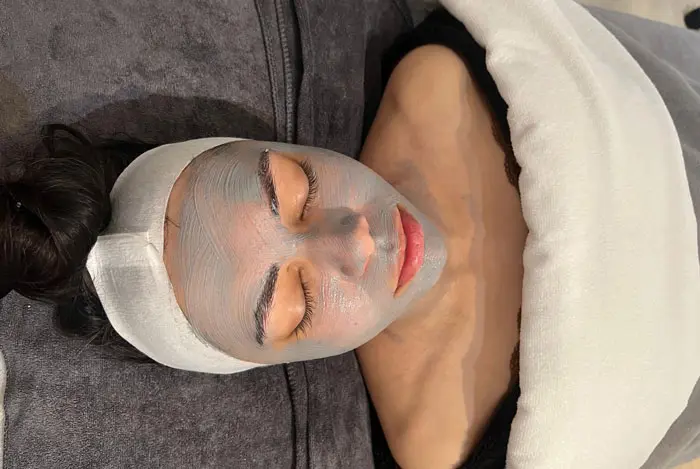
What are chemical peels?
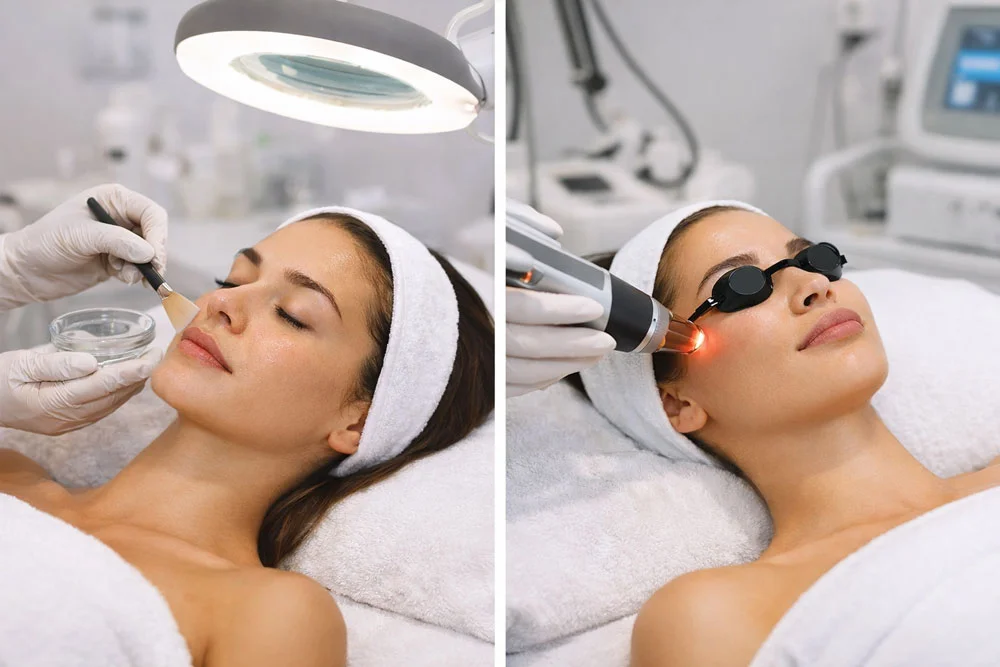
Chemical peels involve applying controlled acid solutions such as glycollic, lactic, salicylic, or TCA to exfoliate the upper skin layers. This promotes cell turnover and gradually lifts excess pigment.
A typical course includes 4–6 treatments spaced 3–6 weeks apart, depending on your skin type and pigmentation depth.
Benefits of chemical peels for pigmentation
Chemical peels are particularly effective for:
- Superficial sunspots and early pigmentation
- Post-inflammatory hyperpigmentation
- Uneven skin tone and texture
- Darker skin types (Fitzpatrick III–VI)
- Hormonal pigmentation, including melasma
Beyond pigmentation improvement, chemical peels stimulate collagen, refine texture, and brighten overall tone. They are safe, gradual, and compatible with later laser treatments if needed.
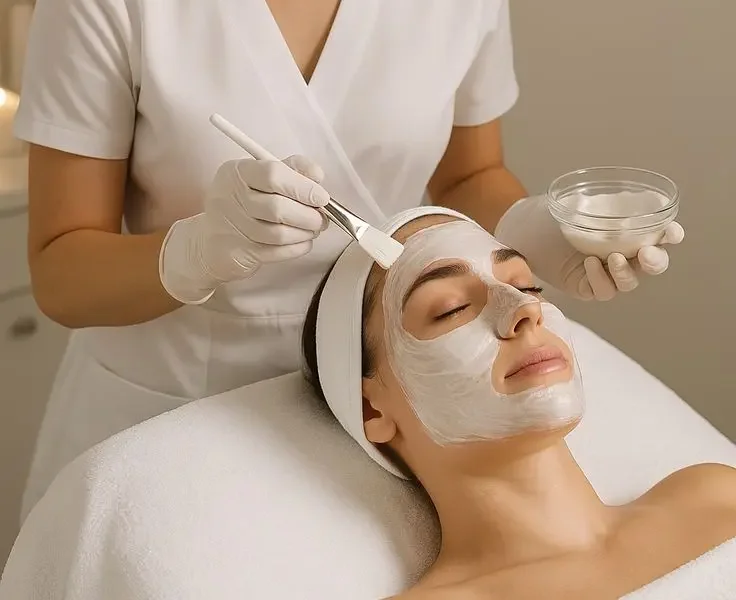
Limitations of chemical peels
While chemical peels are effective, they are progressive in nature, delivering gradual improvement over a series of treatments. However, they may not fully target deeper dermal pigmentation. In such cases, complementary treatments such as laser rejuvenation or skin needling can help enhance results and support more comprehensive skin improvement over time.
What is laser skin rejuvenation?
Laser skin rejuvenation uses targeted wavelengths of light that are absorbed by melanin, breaking pigment into smaller fragments. The body then gradually eliminates these fragments, leading to a reduction in visible pigmentation over time. After treatment, pigmentation may temporarily darken before it slowly fades over several days. If there is no visible change, it may indicate that the pigment has not responded to that specific wavelength.
In addition to pigment reduction, laser rejuvenation also helps to improve overall skin tone and clarity, stimulate collagen production, refine skin texture, and support a more even and radiant complexion.
Benefits of laser rejuvenation for pigmentation
Laser rejuvenation works best for:
- Defined sunspots and age spots
- Deeper or resistant pigmentation
- Lighter skin types (Fitzpatrick I–III)
- Clients seeking faster visible results
Laser treatments also stimulate collagen production, improving skin firmness and overall texture. With correct settings, significant improvements can be achieved in fewer sessions.
Limitations of laser skin rejuvenation
Laser treatment may not suit darker skin or melasma-prone clients without careful customisation, as it can sometimes worsen pigmentation. Downtime is slightly longer than superficial chemical peels, and costs are higher.
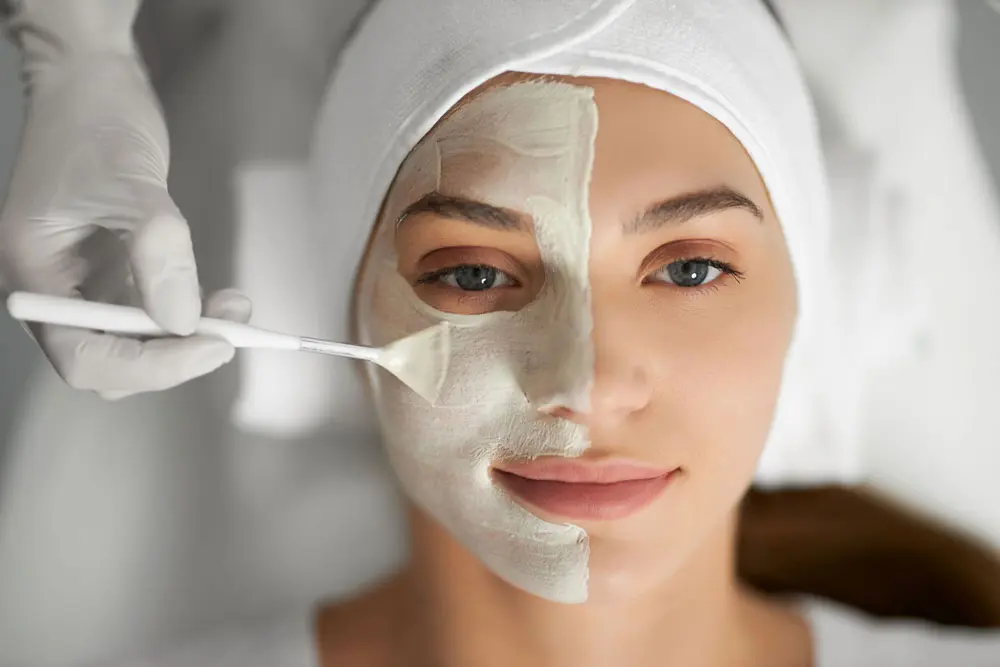
Chemical peels vs laser rejuvenation: which is best for you?
The ideal treatment depends on your skin type, skin condition and pigment depth.
Chemical peels may be ideal if:
- Pigmentation is superficial
- You have darker skin (Fitzpatrick IV–VI)
- You are treating melasma
- You prefer gradual correction
- Minimal downtime is important
Laser rejuvenation may be ideal if:
- You have fair skin (Fitzpatrick I–III)
- You have defined sunspots
- Pigment is deep or resistant
- Faster visible improvement is desired
- longer recovery is acceptable
No single treatment fits everyone. Skin assessment and personalisation are key.
Combining treatments for superior results
Pigmentation is often multifactorial, with clients presenting a mix of sun damage, PIH, age spots, and melasma. Because of this, a combination approach usually works best. In most cases, using more than one treatment helps target different types of pigmentation more effectively and delivers safer, longer-lasting results.
Clinical evidence supports that combination therapy is often more effective than relying on a single treatment alone. By targeting pigmentation at different levels of the skin, this approach delivers more comprehensive improvement, safer outcomes, and longer-lasting results.
Preventing pigmentation recurrence
Even after successful treatments, pigmentation can return if triggers are not managed:
- Daily broad-spectrum SPF protects against UV-induced pigment.
- Limiting heat and sun exposure reduces melanin stimulation.
- Professional skincare at home supports results and cell turnover.
- Periodic maintenance treatments like chemical peels or laser touch-ups maintain even tone.
Long-term pigmentation management focuses on stability, prevention, and overall skin health.
Pigmentation treatments in Melbourne
- Chemical peels are used to gently exfoliate the skin, improve surface texture, and promote healthy cell turnover, helping to reduce superficial pigmentation and enhance overall skin clarity.
- Laser skin rejuvenation targets deeper pigmentation within the skin and stimulates collagen production, supporting a more even skin tone, improved firmness, and long-term skin renewal.
- Skin needling creates controlled micro-injuries in the skin, triggering the skin’s natural wound-healing response. This process supports skin renewal, helps break up uneven pigmentation, and promotes a clearer, more even-toned complexion over time.
- Medical-grade skincare plays a key role in maintaining results at home. A consistent routine with daily broad-spectrum SPF, vitamin A, antioxidants, and pigment-regulating ingredients helps protect the skin, support healing, and reduce the risk of pigmentation recurrence.
At Medix Skincare & Laser Clinic, we often recommend a personalised combination approach based on your skin type and condition and pigmentation depth.
Service reservation
Book your consultation today and start your journey towards clearer, brighter, more even-toned skin.
Contact Medix Clinic
For more information, feel free to contact us at 03 9686 0003.
You can also visit our clinic at 1/367A Centre Road, Bentleigh, Victoria 3204.
Click here to view our location on Google Maps.
FAQ – pigmentation treatments
Laser reduces pigmentation, but pigment may return without sun or heat protection.
Yes, when performed by skilled therapists, they are effective for all pigmentation types.
Most clients require 4–6 sessions depending on pigment depth and skin response.
Superficial peels may cause mild flaking. Laser treatments can produce temporary redness or darkening of pigment.
Yes, combination treatments often provide the most effective results for layered pigmentation.
Disclaimer: This article is for educational purposes and not a substitute for professional advice. Results vary by skin type and treatment adherence. Consult a qualified therapist before starting any procedure.