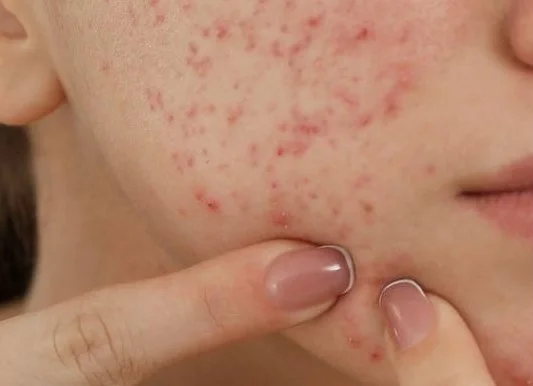
Yes, old acne scars can still improve with professional treatment, even after many years. However, the age of a scar may influence treatment outcomes, and not every type of scarring responds to the same approach.
Clinical research suggests that some newer acne scars respond better to treatment than older ones. But scar age alone doesn’t determine the outcome. The type, depth and structure of the scar, your skin’s healing response and the treatment selected are also important.
At Medix Skincare & Laser Clinic in Bentleigh, Melbourne, we offer medical skin needling and radiofrequency (RF) microneedling to help improve the appearance of selected depressed acne scars.
Here is what current scientific evidence tells us about treating long-standing acne scars.
Does the Age of an Acne Scar Affect Treatment Results?
Scar age may influence treatment outcomes, but there is no established age limit after which acne scars become untreatable.
When inflammatory acne damages the skin’s supporting tissue, the body begins a repair process involving collagen production and remodelling.
As the scar matures, collagen fibres become more organised and the tissue may become firmer. These changes can influence the scar’s structure and potentially its response to treatment.
What Does the Research Say?
A 2024 clinical study published in the Indian Dermatology Online Journal compared fractional CO₂ laser treatment with conventional microneedling in 30 patients with atrophic acne scars.
Researchers found that scars present for less than 10 years responded better to both treatments during the study.
The study also found that rolling and boxcar scars responded differently from ice-pick scars, highlighting the importance of scar type as well as duration.
However, the study was relatively small, so its findings shouldn’t be used to predict an individual patient’s results.
Read the peer-reviewed study on acne scar duration and treatment response.
What does this mean for older acne scars?
Treating scars earlier may offer advantages in some circumstances, but older scars can still respond to procedures that stimulate collagen remodelling.
A scar that’s 10 or 20 years old isn’t automatically unsuitable for treatment. Its depth, shape and underlying tissue attachments may be more important when deciding which approach is appropriate.
Can Acne Scars That Are 10 or 20 Years Old Still Improve?
Long-standing depressed acne scars may improve because the skin retains the ability to respond to controlled injury and undergo collagen remodelling.
Treatments such as medical skin needling and RF microneedling create controlled treatment zones that stimulate a new repair response.
This process may gradually improve the appearance of selected depressed scars, even when the original acne occurred many years earlier.
However, there isn’t enough high-quality research to predict treatment success based solely on whether a scar is 5, 10 or 20 years old.
A professional assessment is needed to understand the scar’s structure and whether it is likely to respond to the treatments available.
Which Types of Old Acne Scars Can Be Treated?
Acne scars generally fall into two main categories: atrophic (depressed) scars and hypertrophic (raised) scars.
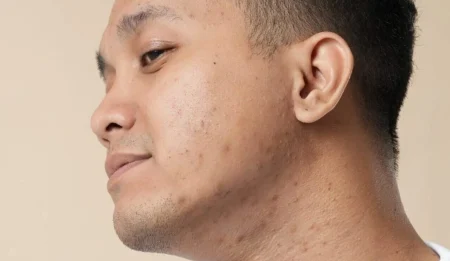
Atrophic scars develop when the skin loses collagen during the healing process, leaving depressions in the skin. These are the most common types of acne scars and are usually classified as rolling, boxcar or ice-pick scars.
Raised scars, on the other hand, develop when the skin produces too much collagen during healing. They include hypertrophic scars, which stay within the original area of injury, and keloid scars, which can grow beyond it.
Understanding which type of acne scar you have is important because different scars respond to different treatments.
Rolling Scars
- Rolling scars create broad, shallow depressions that give the skin a wavy appearance.
- Some rolling scars may respond to collagen-stimulating treatments, particularly when they are relatively shallow.
- However, rolling scars can sometimes be attached to deeper tissue by fibrous bands. These are known as tethered scars.
- Strongly tethered scars may require a medical procedure called subcision to release the underlying attachments.
Subcision is not offered at Medix and requires assessment by an appropriately qualified medical practitioner.
Boxcar Scars
- Boxcar scars are round or oval depressions with relatively defined edges.
- Shallow boxcar scars may respond to medical skin needling or RF microneedling, depending on their depth and the surrounding skin.
- Deeper boxcar scars may require specialist procedures.
Ice-Pick Scars
- Ice-pick scars are small, narrow depressions that extend deeper into the skin.
- Because of their depth, they can be difficult to improve with conventional skin needling or RF microneedling alone.
- Targeted medical procedures may be more appropriate for these scars.
Hypertrophic Scars
- Hypertrophic scars are raised, thickened scars that remain within the boundaries of the original acne lesion.
- They develop from excessive collagen production during healing and require a different treatment approach from depressed acne scars.
At Medix, we don’t offer treatments for hypertrophic acne scars. These scars require medical assessment and may benefit from specialist treatment.
For more information, read our guide to how acne scars form and the different types of scarring.
Treatment Options for Old Acne Scars
At Medix, we offer two treatments that may be suitable for selected long-standing depressed acne scars.
Both encourage collagen remodelling, but they work differently and are not interchangeable for every skin concern.
1. Medical Skin Needling
Best suited for: Selected mild to moderate depressed acne scars, including some rolling and shallow boxcar scars.
- Medical skin needling uses fine needles to create controlled micro-injuries in the skin.
- These micro-injuries activate the skin’s natural wound-healing response, encouraging collagen production and remodelling.
- Over time, this process may help improve uneven texture and soften the appearance of certain depressed acne scars.
- The treatment doesn’t depend on the scar being newly formed. It stimulates a new repair response in the treated skin.
A 2022 systematic review and meta-analysis examined 12 randomised controlled trials involving 414 participants.
What does the scientific evidence say about skin needling for acne scars?
The review supported microneedling as a treatment option for acne scarring, although treatment outcomes and comparisons varied between studies.
Read the 2022 systematic review on microneedling for acne scars.
What kind of improvement can you expect?
Improvements are gradual rather than immediate.
A series of 3-6 treatments may be recommended, with time between sessions to allow the skin to recover and remodel.
Medical skin needling may improve selected depressed scars, but it cannot guarantee complete removal, particularly when scarring is deep or strongly tethered.
Learn more about medical skin needling in Melbourne.
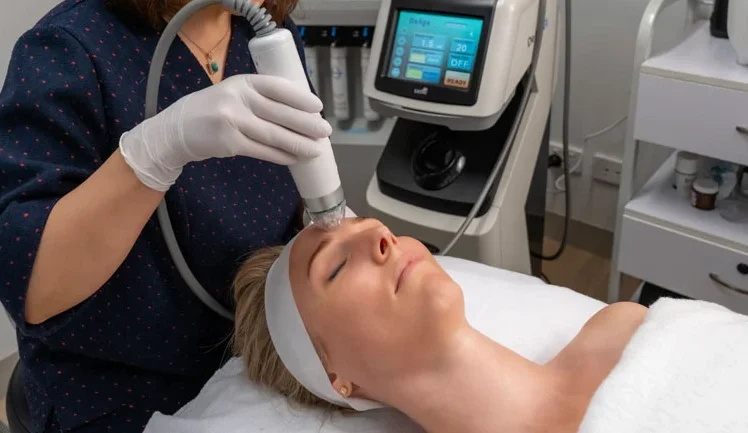
2. Radiofrequency (RF) Microneedling
Best suited for: Selected moderate or more pronounced depressed acne scars, including some long-standing scars.
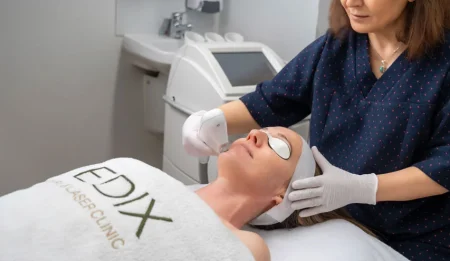
RF microneedling combines fine needles with controlled radiofrequency energy delivered into selected layers of the skin.
The needles create controlled treatment zones, while RF energy generates targeted heating within the dermis.
Together, these effects encourage the skin’s natural repair process and stimulate collagen production and remodelling in deeper skin layers.
This may gradually improve the appearance of certain depressed acne scars.
What Does the 2025 Systematic Review Say About RF Microneedling?
A 2025 systematic review published in Clinical, Cosmetic and Investigational Dermatology evaluated the effectiveness and safety of fractional RF microneedling as a treatment for acne scars.
The review included 16 clinical studies, 481 patients and 6 randomised controlled trials.
The researchers found that fractional RF microneedling was a promising treatment for acne scarring when used on its own.
The included studies reported improvements in acne scar appearance, although results varied between patients, scar types and treatment protocols.
Reported side effects included temporary redness, swelling and occasional pigmentation changes.
The researchers also highlighted important limitations, including differences in treatment settings, relatively short follow-up periods and the need for larger clinical trials.
The conclusion: RF microneedling is supported by a growing body of clinical evidence as a potentially effective treatment for acne scars, but further research is needed to establish optimal treatment protocols and long-term outcomes.
Read the full 2025 systematic review on RF microneedling for acne scars.
Can RF Microneedling Improve Old Acne Scars?
RF microneedling may help improve selected long-standing depressed scars by encouraging new collagen remodelling. However, scar depth, tissue attachment and individual skin characteristics remain important considerations.
RF microneedling is also not automatically better than conventional skin needling for everyone.
Deep ice-pick scars and strongly tethered rolling scars may require specialist medical procedures rather than RF microneedling alone.
Learn more about RF microneedling in Melbourne.
Why Old Acne Scars Become More Noticeable with Age?
As skin ages, changes in collagen, elasticity and facial volume can make existing depressed scars appear more noticeable. This doesn’t necessarily mean the scars themselves have become deeper.
Instead, changes in the surrounding skin may make the depressions and uneven texture more visible.
Treatments that encourage collagen remodelling may help improve selected textural concerns, although they cannot reverse every age-related change in the skin.
Can Old Acne Scars Disappear Completely?
Professional treatments may improve the appearance of acne scars, but complete removal isn’t always possible.
The degree of improvement depends on several factors:
- Scar type, depth and underlying tissue attachments
- Scar maturity and duration
- Skin type and individual healing response
- Treatment selection and settings
- Number of sessions and recovery between treatments
Shallow scars may respond differently from deep or strongly tethered scars.
A realistic treatment plan should focus on achievable improvements rather than promising to erase scars completely.
How Many Treatments Are Needed for Old Acne Scars?
There isn’t a fixed number of sessions suitable for everyone.
Medical skin needling and RF microneedling may require a course of treatments, depending on the extent and characteristics of the scarring.
Collagen remodelling takes time, so improvements may continue developing over weeks to months after treatment.
During your consultation, your clinician can assess the scars, discuss whether treatment is appropriate and explain the likely recovery requirements.
Should You Treat Acne Scars Early?
Managing active inflammatory acne early is important because it can help reduce the risk of additional scarring.
For existing scars, some research suggests that shorter scar duration may be associated with better outcomes following certain procedures.
However, this doesn’t mean every newly formed scar should be treated immediately. The skin needs appropriate time to heal, active acne may need to be controlled, and different procedures have different suitability requirements.
The most appropriate time to consider treatment depends on the condition of your skin, the type of scar and the procedure being considered.
What If Your Old Acne Marks Are Red or Brown Rather Than Depressed?
Not every mark left behind by acne is a structural scar. Flat red or pink marks may be post-inflammatory erythema (PIE), while brown or darker marks may be post-inflammatory hyperpigmentation (PIH).
These concerns involve changes in skin colour rather than the same collagen loss seen in depressed acne scars. They may respond to different treatment approaches.
At Medix, selected chemical peels may help improve certain pigmentation concerns by supporting skin regeneration and renewal.
Our Energist UltraPlus VPL skin rejuvenation system may also be considered for selected redness or superficial pigmentation concerns in suitable skin types.
For a detailed comparison of these concerns and available treatments, read our guide to acne scar treatment in Melbourne.
A Personal Approach to Treating Old Acne Scars at Medix
At Medix Skincare & Laser Clinic, we assess your skin before recommending treatment.
We consider the type and depth of your scars, how long you’ve had them, previous treatments, skin sensitivity and what you’d like to improve. We also discuss potential benefits, limitations, recovery time and your budget.
Medical skin needling or RF microneedling may be suitable for certain depressed scars.
For deeper, strongly tethered or raised scars, specialist medical assessment may be more appropriate.
Our approach is simple: understand your skin first, then work together to find the treatment options that are most suitable for your individual needs.
Is It Worth To Treat Acne Scars After Many Years?
Old acne scars can still improve, but the expected results depend on more than how long you’ve had them.
Scientific research supports collagen-stimulating treatments for selected depressed acne scars, while also suggesting that scar duration may influence outcomes in some circumstances.
A professional assessment can help determine whether treatment is appropriate and what level of improvement may realistically be expected.
Medix Skincare & Laser Clinic
1/367A Centre Road, Bentleigh, VIC 3204
Inside Allegiance Medical Centre, near Bentleigh Station
Phone: (03) 9686 0003
Email: hello@medixskincare.com.au
Contact Medix Skincare & Laser Clinic to arrange a personalised skin consultation.
Frequently Asked Questions:
Are newer acne scars easier to treat than older scars?
Some studies have found better treatment outcomes in acne scars of shorter duration. However, evidence is limited, and results vary according to scar type, treatment method and individual skin characteristics.
Can microneedling work on scars that are more than 10 years old?
Medical skin needling may improve selected long-standing depressed acne scars by encouraging collagen remodelling. However, there is insufficient evidence to predict treatment success based solely on a scar being more than 10 years old.
Is RF microneedling effective for old acne scars?
RF microneedling may improve selected established atrophic acne scars. A 2025 systematic review supports its potential effectiveness for acne scarring generally, but it does not establish an age-specific success rate.
Can old acne scars improve naturally without treatment?
Established structural acne scars generally persist, although their appearance can change over time. Flat post-acne redness or pigmentation may fade naturally and should not be confused with depressed scarring.
Does RF microneedling work better than skin needling?
Not necessarily. Both treatments may improve selected depressed scars, but their suitability depends on scar depth, skin characteristics, treatment risks and individual goals.
Can skincare products remove old depressed acne scars?
Skincare products can support skin health and may improve pigmentation or uneven tone, but they generally cannot correct deep structural depressions caused by collagen loss.
Scientific References
- Agrawal K, et al. (2024). Evaluating the Pros and Cons of Fractional CO₂ Laser Versus Microneedling in Atrophic Acne Scars in the Skin of Color: A Split Face Study. Indian Dermatology Online Journal. Read on PubMed.
- Fractional Radiofrequency Microneedling as a Monotherapy in Acne Scar Management: A Systematic Review of Current Evidence. (2025). Clinical, Cosmetic and Investigational Dermatology. Read the full systematic review.
- Microneedling Monotherapy for Acne Scar: Systematic Review and Meta-Analysis of Randomized Controlled Trials. (2022). Aesthetic Plastic Surgery. Read on PubMed.
Disclaimer: This article provides general educational information and does not replace individual medical advice. Cosmetic treatments carry risks, including irritation, infection, burns, pigmentation changes and scarring. Treatment suitability and outcomes vary. A qualified professional should assess your skin before recommending a procedure.
Written by Elham Ghaedi
Founder & Dermal Clinician at Medix Skincare & Laser Clinic
With more than 15 years of experience in the skin and dermal industry, Elham specialises in skin treatments and personalised approaches to improving skin health and appearance.