If you’re considering microdermabrasion for acne scars, you might be wondering whether this gentle skin-resurfacing treatment can really make a difference.
The answer depends on what you’re trying to improve.
Microdermabrasion can help smooth superficial skin texture and improve dullness, but its effectiveness for deeper, depressed acne scars is limited.
Not every mark left behind by acne is a permanent scar. Some are changes in skin colour, while others involve damage to the skin’s deeper supporting structures.
Understanding these differences can help you choose a treatment that suits your skin rather than spending time and money on something unlikely to address your main concern.
Let’s explore how microdermabrasion works, what scientific research tells us and how it compares with microneedling for acne scarring.
What Is Microdermabrasion and How Does It Work?
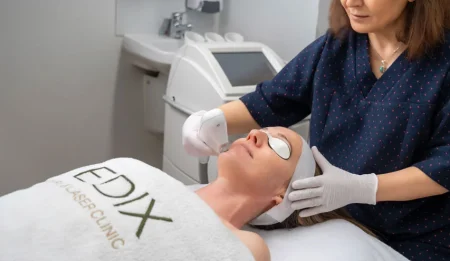
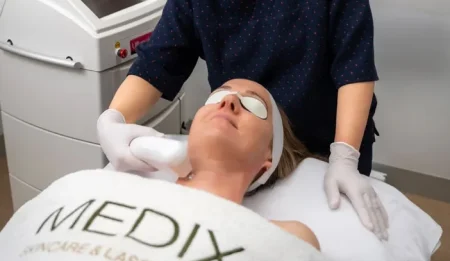
Microdermabrasion is a non-invasive skin-resurfacing treatment that gently exfoliates the outermost layer of the skin.
It removes accumulated dead skin cells and can help improve the appearance and feel of superficial roughness, dullness and mild uneven texture.
Two common methods are used.
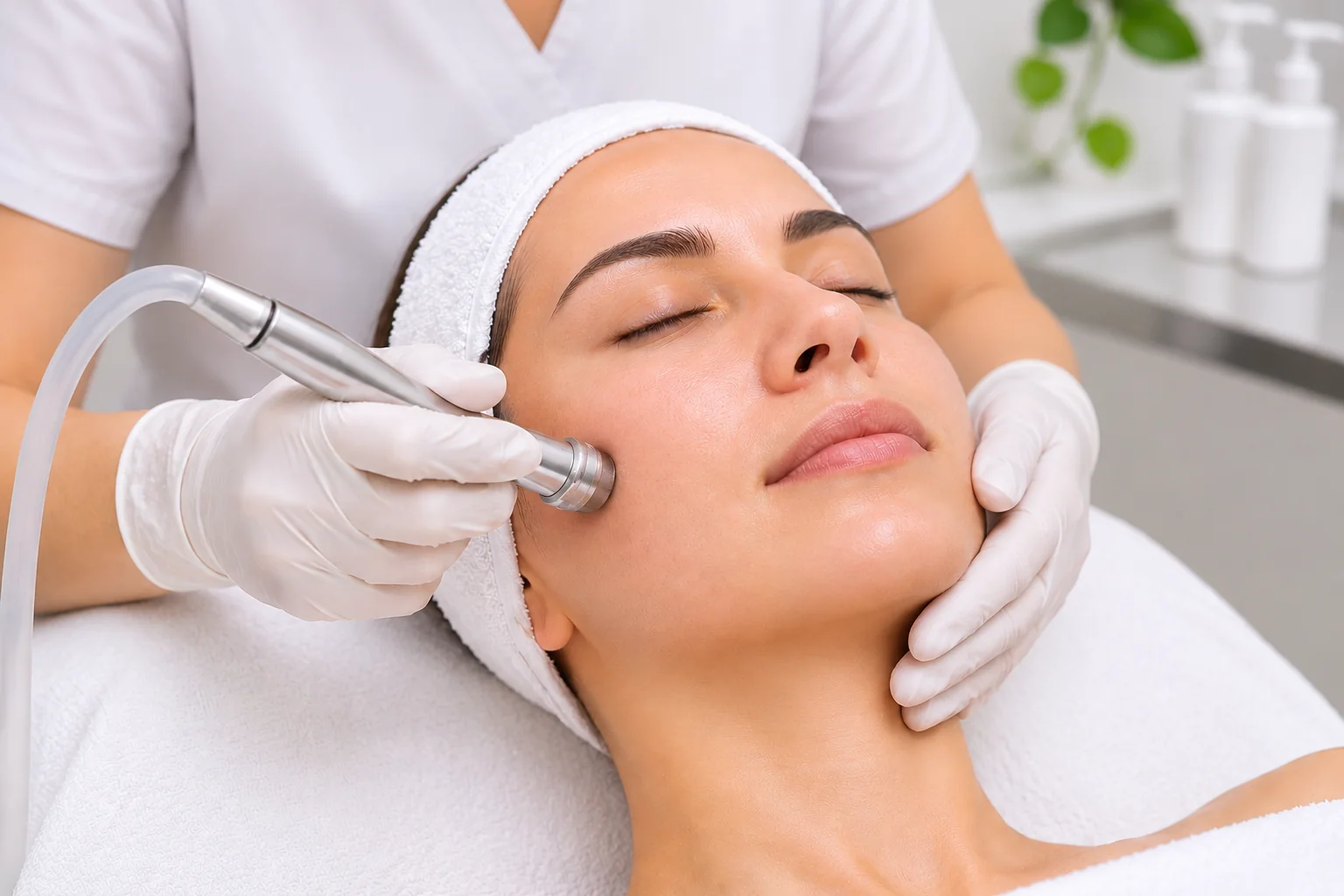
Diamond-Tip Microdermabrasion
Diamond-tip microdermabrasion uses a handpiece with a fine diamond-coated surface to gently exfoliate the skin.
The handpiece is commonly combined with suction to collect loosened skin cells and debris.
The level of exfoliation can be adjusted according to the treatment area, skin condition and device settings.
Crystal Microdermabrasion
Crystal microdermabrasion uses a controlled stream of fine abrasive crystals, commonly aluminium oxide, to exfoliate the skin’s surface.
A vacuum system then collects the used crystals and loosened skin cells.
Both approaches provide superficial mechanical exfoliation.
Although microdermabrasion can produce changes in the skin beyond its immediate surface effects, it does not reliably remodel the deeper tissue responsible for established depressed acne scars.
Can Microdermabrasion Improve Acne Scars?
Before choosing a treatment, it’s important to understand what type of mark or scar you’re trying to improve.
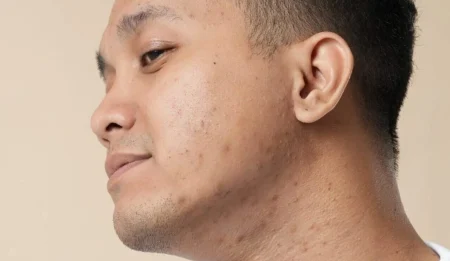
After acne heals, you may notice flat discolouration, superficial unevenness or deeper indentations.
These concerns are often grouped together as acne scars, but they are not the same.
Post-Acne Marks
- Flat red, pink or brown marks can remain after a breakout has healed.
- These are generally caused by lingering redness or changes in pigmentation rather than permanent structural scarring.
- They may gradually fade over time, although this can take months.
Microdermabrasion may improve certain superficial skin concerns, but it isn’t necessarily the most appropriate treatment for post-acne pigmentation, particularly in skin prone to irritation or hyperpigmentation.
Superficial Uneven Texture
- If your skin feels rough or looks dull after acne, microdermabrasion may help improve its surface smoothness.
- Some people notice a softer, brighter appearance following treatment.
- However, these benefits should not be confused with the correction of deeper scars.
Depressed Acne Scars
- Depressed, or atrophic, acne scars develop when inflammation damages the skin’s supporting tissue and collagen is lost during healing.
- Common types include rolling, boxcar and ice-pick scars.
- Because these scars involve structural changes beneath the skin’s surface, superficial exfoliation alone is unlikely to produce substantial improvement.
- Treatments that target collagen remodelling or the underlying scar structure may be more appropriate.
If you’re unsure which type of scarring you have, our article on how acne scars form explains these differences in more detail.
What Does Scientific Research Say About Microdermabrasion for Acne Scars?
Microdermabrasion has been used in professional skincare for many years, but clinical research specifically supporting its effectiveness for acne scars remains limited.
A 2017 systematic review published in Scars, Burns & Healing examined non-energy-based treatments for acne scarring.
The researchers identified a small study involving 11 people with moderate-to-severe depressed acne scars who received eight weekly microdermabrasion treatments.
After completing the treatment series:
- Three participants experienced no improvement.
- Five experienced mild improvement.
- Two experienced moderate improvement.
- One experienced good improvement.
None achieved the study’s highest improvement category.
Although this study was too small to establish definitive outcomes, it suggests that microdermabrasion may offer only modest benefits for established depressed acne scars.
A separate evidence-based review published in Plastic and Reconstructive Surgery in 2010 found that microdermabrasion could produce changes in certain components of the skin’s supporting tissue and improve some contour irregularities.
However, the authors also highlighted limitations in the available evidence, particularly for active acne and pigmentation concerns.
What does this mean for your skin?
Microdermabrasion may be helpful for superficial skin rejuvenation, but there isn’t strong clinical evidence to recommend it as a primary treatment for deeper acne scars.
If your main concern is visible indentations, it may be worth exploring treatments specifically designed to address structural scarring.
Can Microdermabrasion Help Acne-Prone Skin?
Microdermabrasion can remove superficial dead skin cells and may improve the appearance of mild congestion or rough texture.
However, it is not recommended over active inflammatory acne, particularly when the skin has inflamed pimples, pustules, painful nodules or open lesions.
The mechanical exfoliation and suction involved in the procedure can irritate or damage inflamed areas, potentially rupture pustules and worsen existing inflammation. If an active skin infection is present, treatment may also increase the risk of spreading infectious material.
For this reason, controlling active acne should take priority over superficial resurfacing treatments.
Once inflammation has settled, a professional skin assessment can help determine whether microdermabrasion is suitable for any remaining superficial texture concerns.
You can learn more about managing breakouts and reducing the risk of future scarring in our article on how to prevent acne scars.
What Should You Know Before Choosing Microdermabrasion?
Microdermabrasion is generally considered a low-downtime treatment when performed appropriately, but it’s important to understand what to expect.
Is Microdermabrasion Painful?
- Most people tolerate the treatment well.
- You may feel a mild scratching or suction sensation as the handpiece moves across your skin.
- Temporary redness, tightness or sensitivity can occur, particularly if your skin is reactive.
How Long Does Recovery Take?
- Many people can return to their usual activities shortly after treatment.
- However, the skin may remain slightly sensitive or dry for a short period, and your clinician may recommend temporarily adjusting your skincare routine.
How Soon Will You See Results?
- Some people notice that their skin feels smoother or appears brighter after their first session.
- However, improvements in deeper acne scars are generally limited.
It’s important to have realistic expectations and understand that smoother surface texture doesn’t necessarily mean the underlying scars have improved.
How Many Sessions Will You Need?
- A series of treatments may be recommended for certain superficial skin concerns.
- However, repeated microdermabrasion sessions don’t guarantee meaningful improvement in depressed acne scars.
- The number of treatments should depend on your skin condition, treatment goals and individual response.
Is Microdermabrasion Suitable for All Skin Types?
- Microdermabrasion may be suitable for a range of skin tones, but not everyone is an appropriate candidate.
- People with active inflammatory acne, rosacea, sensitive or compromised skin, active infections or a tendency toward post-inflammatory pigmentation may require additional precautions.
- Your medications, recent skin procedures and overall skin condition should also be considered before treatment.
How to Care for Your Skin After Microdermabrasion
Although microdermabrasion is a relatively superficial procedure, your skin may be temporarily more sensitive afterward.
A gentle aftercare routine can help keep your skin comfortable while it recovers.
- Keep your skincare simple. Use a gentle cleanser and a suitable moisturiser to support your skin barrier.
- Protect your skin from the sun. Apply broad-spectrum SPF 50 or SPF 50+ sunscreen and avoid unnecessary sun exposure.
- Avoid harsh exfoliation. Temporarily avoid scrubs, exfoliating acids and strong active ingredients until your clinician advises that they can be resumed.
- Be gentle with your skin. Avoid picking, rubbing or using abrasive cleansing tools on sensitive areas.
- Follow personalised aftercare advice. Recommendations may vary depending on your skin condition and the treatment performed.
If you experience increasing sensitivity, swelling, or other unusual symptoms, contact your treating clinician.

Microdermabrasion vs Microneedling: Which Is Better for Acne Scars?
Although their names sound similar, microdermabrasion and microneedling work differently and are generally used for different skin concerns.
Microdermabrasion focuses primarily on superficial exfoliation, helping improve the appearance of roughness and dullness.
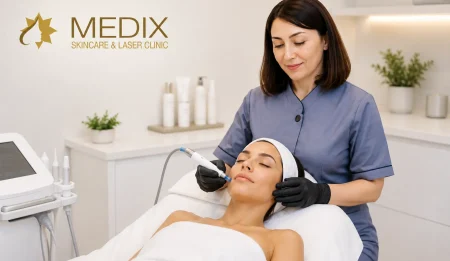
Microneedling uses fine needles to create controlled micro-injuries within the skin, stimulating a healing response that encourages collagen remodelling.
Because depressed acne scars involve changes in the skin’s deeper supporting tissue, microneedling has a stronger clinical rationale and evidence base for treating selected types of atrophic scarring.
How Do the Two Treatments Compare?
| Microdermabrasion | Microneedling | |
|---|---|---|
| How it works | Gently exfoliates the skin’s surface | Creates controlled micro-injuries to stimulate collagen remodelling |
| Treatment depth | Primarily superficial | Reaches deeper skin layers, depending on needle depth |
| Best suited for | Dullness, roughness and mild surface irregularities | Selected depressed acne scars and uneven texture |
| Effectiveness for depressed scars | Limited clinical evidence and generally modest results | Stronger clinical evidence for selected atrophic scars |
| Downtime | Usually minimal | Redness, sensitivity and sometimes mild swelling for a few days |
| Number of sessions | May require repeated sessions for superficial concerns | Usually involves a planned treatment course, depending on scar type and response |
What Does Research Say About Microneedling?
Unlike microdermabrasion, microneedling has been investigated in numerous clinical studies involving people with acne scarring.
A 2024 systematic review and network meta-analysis published in Archives of Dermatological Research examined 24 randomised controlled trials involving 1,546 participants.
The researchers evaluated microneedling alone and in combination with other treatments for acne scars.
The findings supported the effectiveness of microneedling-based approaches for improving acne scarring, with some combination treatments showing better outcomes than microneedling alone.
However, treatment results varied, and the findings don’t mean that microneedling is suitable for every scar type or every person.
Importantly, this research wasn’t a direct comparison between microneedling and microdermabrasion.
Rather, the available evidence for microneedling is more extensive and more directly relevant to collagen remodelling in depressed acne scars.
Which Treatment Should You Choose?
If your main concern is dullness, rough skin or mild superficial unevenness, microdermabrasion may be worth considering.
However, if you’re concerned about visible indentations left behind by acne, microneedling may be a more appropriate treatment to explore.
You can learn more about medical skin needling at Medix.
The most suitable option still depends on the type, depth and distribution of your scars, as well as your skin condition and treatment goals.
What About RF Microneedling and Other Acne Scar Treatments?
Microneedling isn’t the only option for depressed acne scars.
Radiofrequency microneedling combines microneedling with radiofrequency energy to stimulate collagen remodelling and may be suitable for selected types of scarring.
Chemical peels may be considered for certain pigmentation, congestion and superficial texture concerns, depending on the peel formulation and depth.
Deeper ice-pick scars or scars that are firmly attached to underlying tissue may require specialist procedures, sometimes in combination with other treatments.
No single procedure is equally effective for every type of acne scar.
For a broader explanation of treatment options, visit our guide to acne scar treatments in Melbourne.
Finding the Right Treatment for Your Skin
Not every mark left behind by acne is a scar, and choosing the right treatment starts with understanding your skin.
At Medix Skincare & Laser Clinic in Bentleigh, Melbourne, we take the time to assess your skin and explore the options that may be suitable for you.
Whether you’re concerned about uneven texture, post-acne marks or deeper scarring, we’ll help you understand what each treatment can realistically achieve.
Book a consultation with us, and let’s work together to find the best approach for your skin’s needs and goals.
Frequently Asked Questions
Can Microdermabrasion Remove Acne Scars Completely?
No. Microdermabrasion may improve superficial skin texture, but it cannot reliably remove established depressed acne scars. Deeper scars generally require treatments that address structural changes within the skin.
Does Microdermabrasion Help With Dark Marks After Acne?
Microdermabrasion may help certain superficial pigmentation concerns, but it isn’t necessarily the most suitable treatment for post-acne marks. The right approach depends on the type of pigmentation, your skin tone and sensitivity.
Can Microdermabrasion Make Acne Worse?
Performing microdermabrasion over inflamed, irritated or compromised skin may aggravate sensitivity. Active inflammatory acne should be assessed before considering treatment.
Is Diamond-Tip Microdermabrasion Better Than Crystal Microdermabrasion?
Both methods provide superficial mechanical exfoliation. Their suitability depends on the device, treatment settings and individual skin condition. There isn’t strong evidence that one method consistently produces better results for depressed acne scars.
How Many Microdermabrasion Sessions Are Needed for Acne Scars?
There is no established number of sessions that guarantees improvement. Even repeated treatments may provide limited results for deeper depressed scars, so a professional assessment can help determine whether another approach would be more appropriate.
Can You Have Microdermabrasion and Microneedling Together?
These treatments may sometimes be included in a broader skin-management plan, but they shouldn’t automatically be combined or performed close together. The timing and suitability depend on your skin condition, sensitivity and the procedures involved.
Scientific References
- Kravvas G, Al-Niaimi F. A systematic review of treatments for acne scarring. Part 1: Non-energy-based techniques. Scars, Burns & Healing. 2017. Read the peer-reviewed systematic review.
- Karimipour DJ, Karimipour G, Orringer JS. Microdermabrasion: An evidence-based review. Plastic and Reconstructive Surgery. 2010;125(1):372–377. Read the peer-reviewed review.
- Li H, Jia B, Zhang X. Comparing the efficacy and safety of microneedling and its combination with other treatments in patients with acne scars: A network meta-analysis of randomized controlled trials. Archives of Dermatological Research. 2024;316:505. Read the systematic review and meta-analysis.
Prepared by Elham Ghaedi | Dermal Clinician
Medix Skincare & Laser Clinic, Bentleigh, Melbourne.
Elham Ghaedi is a dermal clinician at Medix Skincare & Laser Clinic. Her approach focuses on personalised skin assessment, evidence-informed treatments and helping clients understand their skin concerns and suitable treatment options.
Medical Disclaimer
This article is provided for general educational purposes only and does not replace personalised medical advice, diagnosis or treatment.
Microdermabrasion, microneedling and other professional skin treatments may not be suitable for everyone. Treatment outcomes vary depending on individual skin characteristics, medical history, scar type and the procedure performed.
If you have active inflammatory acne, a skin infection, significant skin sensitivity, a history of abnormal scarring or are using prescription acne medication, seek advice from a qualified healthcare professional before undergoing treatment. No procedure can guarantee complete removal of acne scars.