You’ve decided to do something about your acne scars, but there’s one problem: you’re still getting pimples. Does that mean you have to wait before starting treatment?
Not necessarily. You may be able to treat existing acne scars while still experiencing occasional breakouts, but active inflammatory acne usually needs to be controlled before starting scar treatments such as medical skin needling or RF microneedling.
The right timing depends on how active your acne is, where your breakouts are located and the condition of your skin.
Let’s look at what scientific research tells us and how to decide when your skin may be ready for acne scar treatment.
Why Should Active Acne Be Controlled Before Treating Scars?
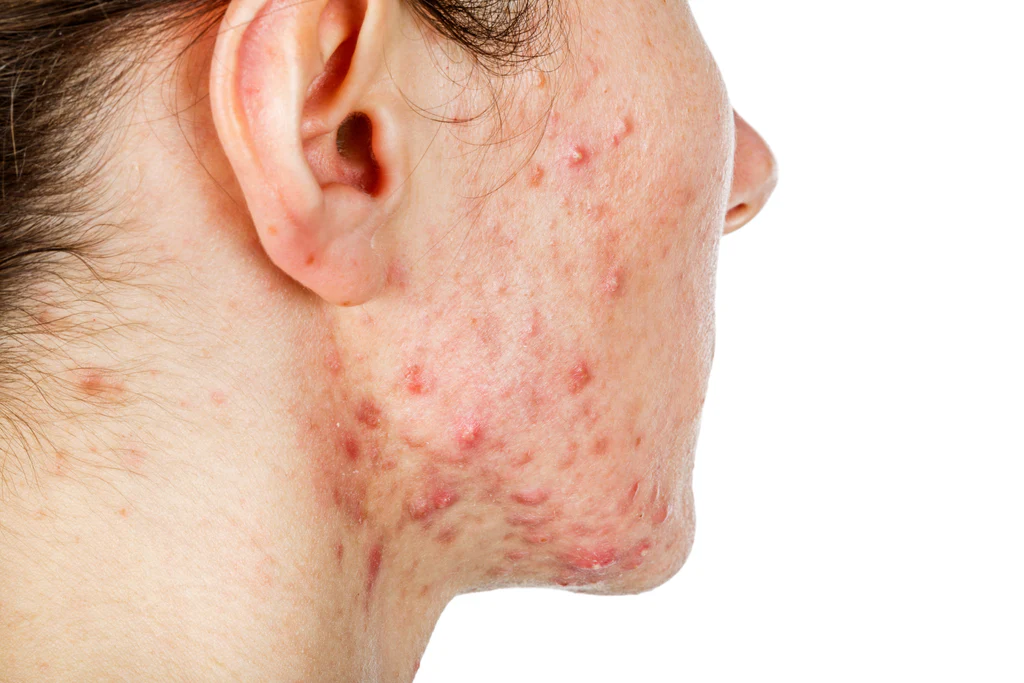
Acne scars develop when inflammation damages the skin’s supporting tissue, including collagen. As the skin heals, it may not fully replace the damaged tissue, leaving a permanent indentation.
If you’re still experiencing frequent inflammatory breakouts, new scars may continue forming while you’re trying to improve older ones.
Research helps explain why this matters.
A prospective study published in the Journal of Drugs in Dermatology followed people with moderate facial acne to investigate how acne lesions developed into scars.
Researchers observed that scarring continued to develop during the study. They also found that many established scars remained visible at the two-year follow-up.
The findings highlight an important point: managing inflammatory acne early can help reduce the risk of further scarring.
This doesn’t mean every pimple will leave a scar. The severity and duration of inflammation, individual healing responses and other factors all influence whether scarring develops.
You can learn more in our article on how acne scars form.
Can You Have Microneedling While You Still Have Pimples?
Medical skin needling creates controlled micro-injuries that encourage collagen production and skin remodelling. Over time, this may help improve the appearance of selected depressed acne scars.
However, when the skin has active inflammatory lesions, treatment requires additional care.
In routine acne scar treatment, clinicians generally avoid needling directly through inflamed pimples, pustules or areas of suspected infection.
Interestingly, research has also investigated microneedling as a treatment for active acne itself.
What Does the Research Say?
A 2023 pilot study published in Skin Health and Disease investigated microneedling for active acne.
Researchers reported reductions in inflammatory and non-inflammatory acne lesions following treatment, with no post-treatment complications reported during the study.
Although these findings are encouraging, the study was small and industry-funded. Larger, independent clinical trials are needed to confirm its findings.
It’s also important to distinguish between microneedling protocols being investigated for active acne and routine microneedling treatments intended to improve acne scars.
A treatment that appears promising for one purpose isn’t automatically suitable for another.
At Medix, we assess the condition of your skin before recommending medical skin needling.
What If You Only Have a Few Pimples?
Having one or two occasional pimples doesn’t necessarily mean you need to postpone all acne scar treatments.
For example, you might have established scars on your cheeks but occasionally develop a small breakout around your chin.
In this situation, your clinician may consider whether treatment can safely proceed in an unaffected area.
The decision depends on the location and severity of your acne, your skin’s sensitivity and the procedure being considered.
Here’s a simple guide:
| Your skin condition | What to consider |
| Frequent inflamed breakouts | Focus on controlling active acne first |
| Deep, painful nodules or cysts | Seek medical assessment to reduce the risk of further scarring |
| Occasional mild pimples | Scar treatment may still be possible after assessment |
| Acne is well controlled; depressed scars remain | Consider appropriate collagen-stimulating treatments |
| Flat red or brown post-acne marks | These may require a different approach from depressed scars |
This is general guidance rather than a diagnosis. Your clinician will need to assess your skin before recommending treatment.
Can RF Microneedling Treat Active Acne and Acne Scars?
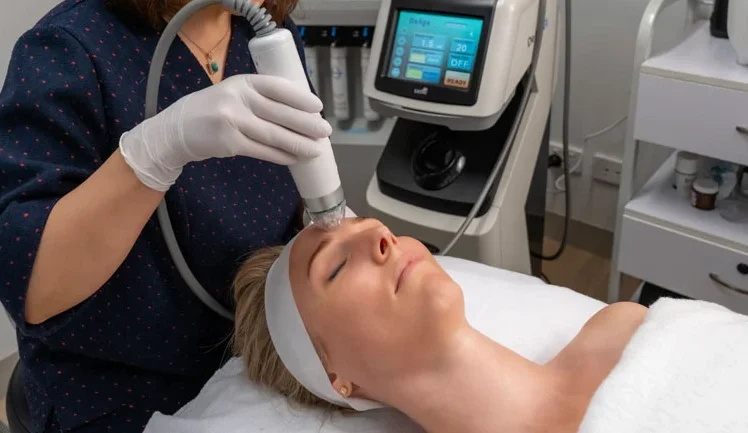
RF microneedling combines fine needles with radiofrequency energy to deliver controlled heat into the skin.
For selected depressed acne scars, the treatment aims to stimulate collagen remodelling and gradually improve uneven skin texture.
RF-based technologies have also been investigated for active acne. However, different devices use different technologies, treatment depths and energy settings.
Research involving one RF device doesn’t necessarily apply to every RF microneedling treatment.
At Medix, we assess whether your acne is sufficiently controlled before considering RF microneedling for acne scarring.
If your skin is actively inflamed, treating the acne first may be the more appropriate option.
Does Scientific Research Support Microneedling for Acne Scars?
Yes. Microneedling has been investigated in clinical trials and systematic reviews as a treatment for depressed acne scars.
A 2022 systematic review and meta-analysis published in Aesthetic Plastic Surgery examined 12 randomised controlled trials involving 414 participants.
The findings supported microneedling as a treatment option for acne scarring, although outcomes varied across treatment techniques and study designs.
This is consistent with earlier research suggesting that microneedling can improve the appearance of selected atrophic acne scars through collagen remodelling.
However, these findings shouldn’t be interpreted as proof that microneedling is appropriate for every scar type or every person with active acne.
The depth and structure of the scar, your skin condition and the treatment technique all influence the results.
Read the 2022 systematic review.
Should You Treat Acne or Acne Scars First?
For most people with frequent inflammatory breakouts, controlling active acne is the first priority.
But that doesn’t mean you need to put your acne scar concerns aside indefinitely.
A sensible approach is to manage the two concerns in stages.
First, Get Your Active Acne Under Control
Mild acne may respond to appropriate topical treatments, while moderate or severe acne may require prescription medication.
Evidence-based medical treatments include benzoyl peroxide, topical retinoids, azelaic acid and selected oral medications.
If you’re experiencing deep, painful breakouts or developing new scars, a GP or dermatologist can help determine whether medical treatment is needed.
Gentle skincare, daily broad-spectrum sunscreen and avoiding picking or squeezing pimples can also support your skin.
Next, Allow Your Skin to Recover
As inflammation settles, it becomes easier to distinguish between temporary post-acne marks and established scars.
Flat red or brown marks may gradually fade, while depressed scars involve structural changes in the skin.
Not every mark left behind by a pimple requires a collagen-stimulating treatment.
Then, Assess Your Existing Scars
Once your skin is suitable for treatment, your clinician can assess the type and depth of your acne scars.
Medical skin needling and RF microneedling may help improve selected rolling and boxcar scars.
Deep ice-pick scars and strongly tethered rolling scars may require specialist procedures beyond the treatments available at Medix.
For more information, explore our guide to acne scar treatment in Melbourne.
Do You Need to Wait Until Every Pimple Has Disappeared?
No. There isn’t a universal number of breakout-free days or weeks that applies to everyone.
Someone with occasional mild pimples may be assessed differently from someone experiencing persistent inflammatory acne.
Your clinician will consider whether the intended treatment area has active lesions, how frequently you’re developing new breakouts, your skin’s sensitivity and any medications you’re using.
The aim is to begin treatment when your skin is suitable, rather than waiting for an arbitrary period of completely clear skin.
Can You Have Acne Scar Treatment While Taking Isotretinoin?
If you’re taking isotretinoin or have recently completed treatment, it’s important to tell your clinician before considering skin needling, RF microneedling or other cosmetic procedures.
Historically, patients were often advised to wait at least six months after isotretinoin before undergoing certain skin treatments.
However, a 2017 systematic review published in JAMA Dermatology examined 32 publications involving 1,485 dermatological procedures and questioned whether a blanket waiting period was necessary for every procedure.
The researchers found insufficient evidence to support routinely delaying several less-invasive dermatological procedures solely because of recent isotretinoin use.
However, this doesn’t establish that all procedures are safe during treatment. Some more aggressive resurfacing procedures still require particular caution.
For microneedling and RF microneedling, treatment suitability should be assessed individually, taking into account the available evidence, device guidance, your skin condition and medical history.
Never stop or change prescribed medication simply to undergo a cosmetic procedure without discussing it with your prescribing doctor.
When Is the Best Time to Start Acne Scar Treatment?
The best time is generally when your acne is sufficiently controlled, recent inflammation has settled and your skin is suitable for the planned procedure.
You don’t necessarily need to wait years before addressing your scars.
And if you’ve already had acne scars for a long time, that doesn’t mean they’re too old to treat.
Your skin can still respond to collagen-stimulating treatments years after the original acne has healed, although the type, depth and duration of your scars may influence the results.
Read our article on whether old acne scars can still be treated for a closer look at the research.
Frequently Asked Questions
Can microneedling make active acne worse?
Needling through active inflammatory or infected lesions may increase irritation or complications. Although early research has investigated microneedling for active acne, this doesn’t mean routine acne scar treatments are suitable for inflamed skin.
Can I treat acne scars if I only get occasional pimples?
Possibly. Occasional mild breakouts don’t automatically rule out treatment. Your clinician will assess the condition of your skin and whether the intended treatment area is suitable.
Should I treat acne or acne scars first?
If you’re experiencing frequent inflammatory breakouts, controlling active acne is generally the first priority. This helps reduce the risk of new scars forming while you plan treatment for existing scars.
Can RF microneedling treat acne and acne scars at the same time?
Some RF technologies have been studied for active acne, but not every RF microneedling device or treatment protocol is designed for this purpose. Suitability depends on the device and your skin condition.
How long after my acne clears can I start microneedling?
There is no universal waiting period. Treatment may be considered once your acne is sufficiently controlled and your clinician confirms that your skin is suitable.
Will my acne scars disappear completely after treatment?
Acne scar treatments aim to improve appearance rather than guarantee complete removal. Results depend on scar type, depth, skin characteristics and the treatments used. Multiple sessions may be needed.
Still Dealing With Both Acne and Acne Scars?
You don’t need to work out which treatment comes first on your own.
At Medix Skincare & Laser Clinic in Bentleigh, Melbourne, we take the time to assess your skin, explore the treatment options that may be suitable for you, and work together to find the best approach for your skin’s needs and goals.
Whether you’re still experiencing occasional breakouts or have scars that have been there for years, we’ll help you understand what improvements may be possible and what to expect from treatment.
Contact Medix to arrange a skin consultation.
Scientific References
- Prospective Study of Pathogenesis of Atrophic Acne Scars and Role of Macular Erythema. Journal of Drugs in Dermatology, 2017. PubMed.
- Study to Determine the Safety and Efficacy of Microneedling as an Effective Treatment for Acne Vulgaris. Skin Health and Disease, 2023. PubMed.
- Shen Y-C, et al. Microneedling Monotherapy for Acne Scar: Systematic Review and Meta-Analysis of Randomized Controlled Trials. Aesthetic Plastic Surgery, 2022. PubMed.
- Spring LK, et al. Isotretinoin and Timing of Procedural Interventions: A Systematic Review With Consensus Recommendations. JAMA Dermatology, 2017. PubMed.
About the Author
Elham Ghaedi | Dermal Clinician
Elham Ghaedi is a dermal clinician at Medix Skincare & Laser Clinic in Bentleigh, Melbourne. She focuses on personalised, evidence-based skin treatments, helping clients understand their skin concerns and choose suitable treatment options based on their individual needs and goals.
Disclaimer: This article provides general educational information and does not replace personalised medical advice. Active acne may require assessment and treatment by a GP or dermatologist. The suitability of cosmetic procedures depends on individual clinical assessment.